From the start of her career, Rabbi Sharon Kleinbaum has held a uniquely individual vision of what a congregational rabbi can be. She built a rabbinate on her lifelong passions for Jewish study, history and prayer, text and tradition, her love for music and literature, her feminism and commitment to LGBTQ liberation, and her determination to erase the bifurcation of spirituality and social justice. In her 32 years at Congregation Beit Simchat Torah, she made that vision a reality and a stunning success.
In 1992, Rabbi Sharon Kleinbaum became CBST’s first rabbi and the first full-time staff person at New York City’s then “Gay and Lesbian” synagogue. She arrived during the worst of the AIDS crisis when a lethal combination of viral illness and anti-Gay bigotry left the community perpetually caring for its sick and dying, mourning its losses, and comforting those left behind. The grief-stricken and embittered congregation called out urgently for pastoral support and spiritual guidance. In the three decades it spent under Rabbi Kleinbaum’s inspired leadership, CBST became the largest LGBTQ synagogue in the world, a powerful and resilient spiritual community of resistance and love. Now, a quarter-century into the new millennium, CBST’s positive impact can be felt throughout New York City, around the USA, in Israel, and worldwide. The stone that the builders dismissed has become a cornerstone of unquestionable significance.
Rabbi Kleinbaum’s vision stands on multiple unshakable loyalties. As a pastor, she stands devoted to her community, celebrating smachot (joys) and accompanying members through tsurot (troubles) great and small. As a service leader on Shabbat and holy days, RSK is renowned for delivering thoughtful and provocative drashot (sermons) on the Torah with a trademark blend of humor and solemnity. Rabbi Kleinbaum is both irreverent and profoundly serious. As a teacher, she shares her unquenchable love for sacred text, Yiddish and other Jewish cultures, and the history of Jewish civilization. As a progressive Zionist committed to the shared future of Israeli Jews and Palestinians, she strives tirelessly for security, safety, peace, and liberation for all dwellers of Israel and Palestine.
Few might have predicted back then how CBST would mature and deepen over time, but the shul’s evolution reflects opportunities and challenges Rabbi Kleinbaum highlighted in her installation drash sermon) on September 11, 1992. That night, she taught a verse from that week’s haftarah: Isaiah 54:1, “Enlarge the size of your tent. Extend the size of your dwelling. Do not stint! Lengthen the ropes and drive the pegs firm.” During her tenure at CBST, RSK filled the tent she found and reshaped it into something more glamorous and powerful, but she always kept its foundations solid. Rabbi Kleinbaum’s vision, as drawn in that prescient drash in 1992, laid out the roadmap for CBST’s future: to be a center for music, to educate children of our families, and to make social justice the clarion call of the community.
In any time of challenge, Rabbi Kleinbaum urges everyone, “Be more Jewish.” For RSK, being Jewish means exploring the abundance inherent in Jewish identity. On the first day COVID shut down the world on March 16, 2020, RSK began teaching a Psalms class four days a week for 18 months.
Collaboration has been central to Rabbi Kleinbaum’s work. With Rabbi Ayelet Cohen, Rabbi Kleinbaum created a Friday night CBST siddur (prayer book) that simultaneously is unabashedly traditional and unabashedly Queer. With Music Director Joyce Rosenzweig, RSK made the experience and appreciation of music a central part of CBST’s religious and cultural life. Over the years, CBST’s community chorus grew stronger and musically more sophisticated under Joyce’s inspiring leadership, and concerts of Broadway, Yiddish, Jewish liturgical and secular music, and classical chamber music became part of the regular rhythm of CBST’s yearly calendar. With Rabbi Benay Lappe, RSK created the Lehrhaus Judaica, a center for adult Jewish learning.
Rabbi Kleinbaum oversaw the expansion of CBST’s membership from its founding community of adults who sought a place where they could be both openly Lesbian and Gay and proudly Jewish. The membership grew to include families with children, trans and non-binary people, Jews of color, Jews in their 20s and 30s who weren’t born when the founding generation first gathered. Under Rabbi Kleinbaum’s supervision emerged CBST’s religious school and flourishing b*mitzvah program for young teens, which – because of CBST’s unique origin story – developed well after the congregation’s adult b*mitzvah program.
CBST learners of all ages have traveled the world with Rabbi Kleinbaum through many congregational trips to Israel, Eastern Europe, Washington D.C., and civil rights tours of the American South. Her boundless fascination with history has blended with her understanding that Jewish and LGBTQ+ history is world history. Through her teaching, the congregation has come to see its broad cultural heritage and the extent of its impact and legacy.
With the caring support of long-time CBST member William Fern, Rabbi Kleinbaum designed and created the Cooperberg-Rittmaster Rabbinical Internship Program in 1994, recognized as the finest training program anywhere in the world for student rabbis and cantors. She has personally mentored over 50 program alums, who now serve in myriad capacities around North America, Europe, and Israel. Beginning in 2012, her rabbinical alma mater, Reconstructionist Rabbinical College, has selected one student for the Kleinbaum Congregational Internship – modeled on the CRRI program RSK created – supporting that student’s development under rabbinical mentorship in a congregational setting. Finally, not only has CBST grown into a congregation that weekly yearns to celebrate Shabbat together, Rabbi Kleinbaum successfully led the community through the process of building its own holy, highly visible space in midtown Manhattan, which CBST has called home since 2016.
Since first engaging Reuben Zellman, the first openly trans rabbinical student, as CBST’s educator (2004) and then as a Cooperberg-Rittmaster Rabbinical Intern, Rabbi Kleinbaum has been committed to the emerging trans and nonbinary communities at CBST. Upon learning that LGBTQ ally, Haredi Rabbi Mike Moskowitz was fired from his positions for advocating for Orthodox Judaism to respect and celebrate trans and LGBTQ lives, RSK brought Rabbi Moskowitz to CBST as a scholar-in-residence. Rabbi Kleinbaum is deeply committed to the huge range of Jewish practice, observance, and belief, reflected in her commitment to having clergy and interns from all movements, backgrounds, and spiritual orientations reflect the many faces of God.
Crucial to this moment in history, CBST has become a community committed to open dialogue among Jews and between Jewish community and communities of other faiths. Rabbi Kleinbaum’s unique focus and guidance in this area have created a bond with members of the Islamic community in New York City, and have made CBST a place where support of Israel includes thoughtful and sometimes highly critical responses to Israel’s policies, including towards the Palestinian people within its borders and within the occupied West Bank and Gaza. Rabbi Kleinbaum was the founding co-chair with Rabbi Gerald Serotta of Rabbis for Human Rights North America in 2002, which later changed its name to T’ruah: The Rabbinic Call for Human Rights. Rabbi Kleinbaum has played a significant role in working with the many communities in Israel fighting for human rights for all.
Rabbi Kleinbaum’s name has appeared multiple years on Newsweek’s list of America’s 50 most influential rabbis. The BBC named her one of the 100 Women of 2024. She was appointed by President Joseph R. Biden to the United States Commission on International Religious Freedom. Rabbi Kleinbaum has served as a Commissioner on New York City’s Commission on Human Rights and has been a member of Mayor Bill de Blasio’s Faith-Based Advisory Council and serves on the Executive Committees of Governor Hochul’s Office of Faith and Non-Profit Development Services and the New York State Interfaith Council (NYSIC).
Rabbi Kleinbaum is a co-founder and Board member of New York Jewish Agenda, a Board member at Interfaith Center of New York, a Co-Chair of the Rabbinic Council of JStreet, has served on the Boards of GMHC, New Israel Fund, and is a member of the Reconstructionist Rabbinical Association, the Central Conference of American Rabbis, the Women’s Rabbinical Network, and J Street’s Clergy Advisory Council. In 2006, she was North American Chair of World Pride.
Rabbi Kleinbaum is the former Assistant Director of the National Yiddish Book Center in Amherst, Massachusetts, and Director of Congregational Relations of the Religious Action Center of Reform Judaism in Washington, D.C. She received an honorary Doctor of Humane Letters, Honoris Causa, from Hebrew College, and an honorary Doctor of Divinity (DDiv) from the Reconstructionist Rabbinical College. Rabbi Kleinbaum is lso an Adjunct Instructor at the Jewish Theological Seminary (JTS).
Rabbi Sharon Kleinbaum is married to Randi Weingarten and has two daughters, one son-in-law, two granddaughters, and many beloved nieces and nephews who have their own fabulous children.
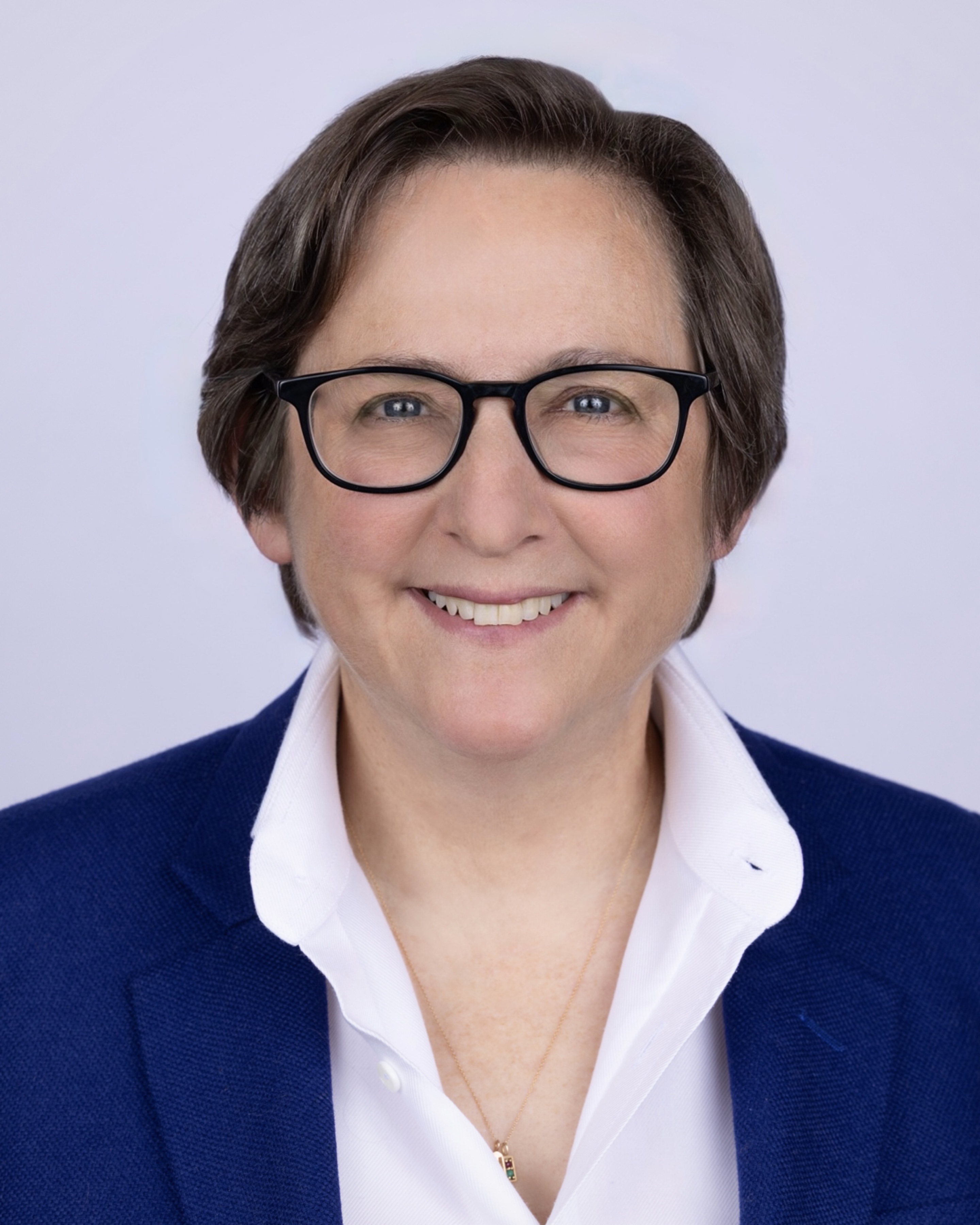
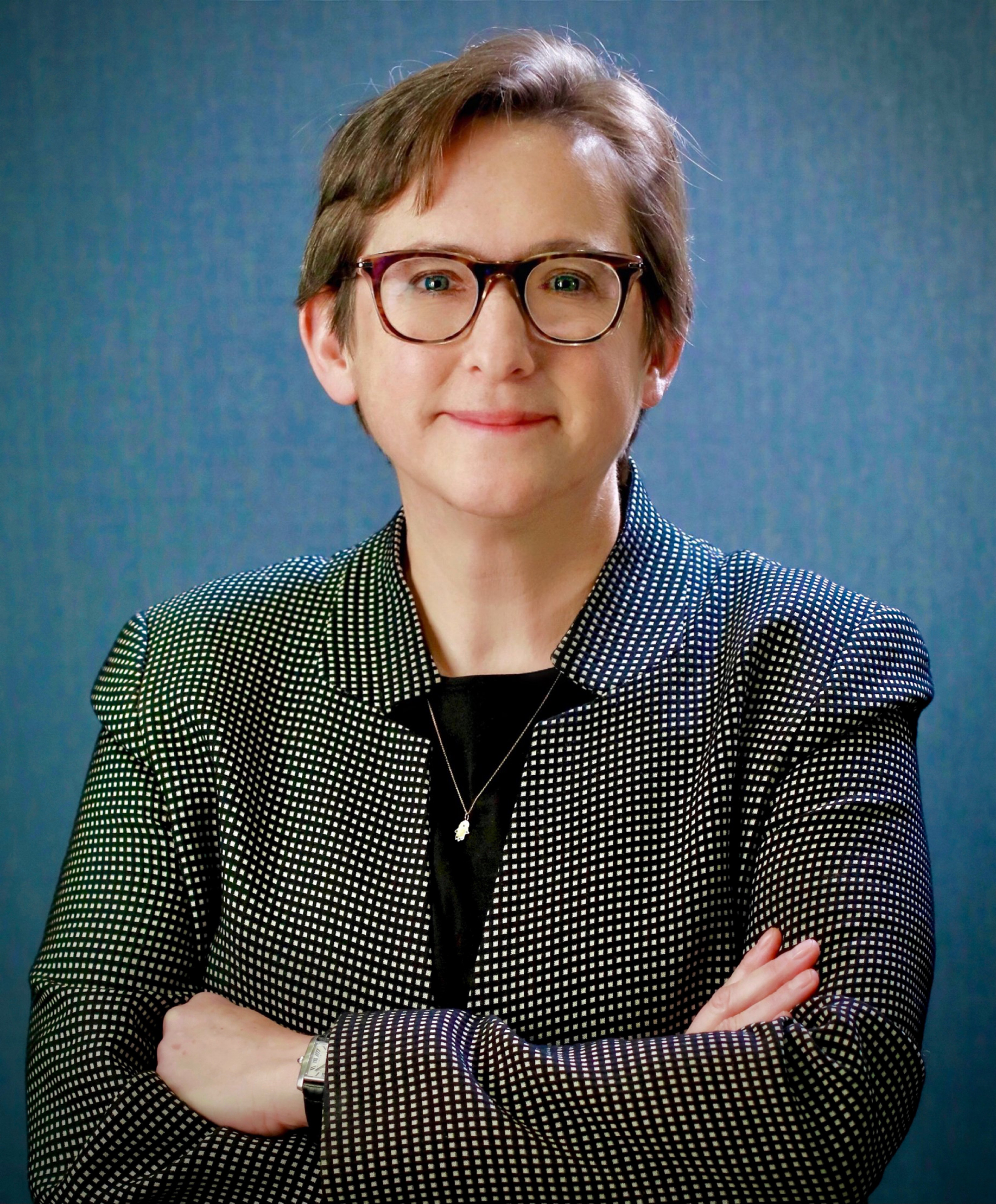
Headshots for Press and Events
Here are short and medium versions of Rabbi Kleinbaum’s bio for press and speaking events.
 Rabbi Sharon Kleinbaum